

Mood, Procrastination, and Executive Dysfunction: Why “Just Try Harder” Isn’t Working
When Simple Tasks Feel Impossible
Do you ever say to yourself, “I know what I need to do. I just can’t make myself do it.” When we feel overwhelmed by our daily routine and responsibilities, this can lead to feeling guilt, shame, and the belief that we must be lazy, unmotivated, or somehow failing at adulthood.
What if the issue isn’t laziness? It could be executive dysfunction.
Executive dysfunction can show up with ADHD, but it also appears in depression, anxiety, trauma, grief, burnout, and chronic stress. Paying bills, answering emails, starting projects, returning texts, scheduling appointments, and cleaning the kitchen are all normal tasks in an average adult’s routine. None of these tasks are necessarily difficult, but they can feel mentally inaccessible.
When people just call this procrastination, they can miss what may be actually happening underneath it.
What Is Executive Dysfunction?
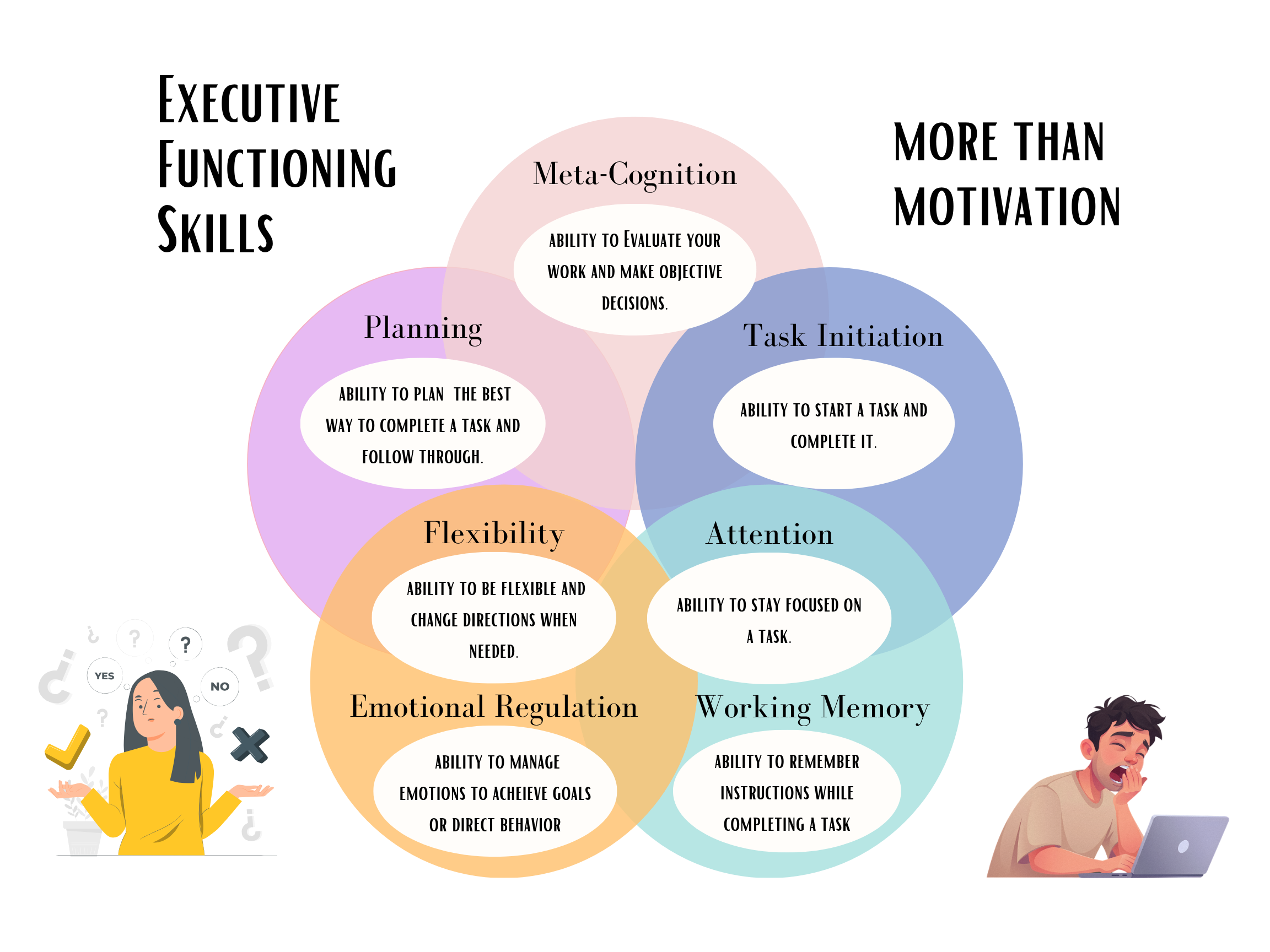
Executive functions refer to skills that you use to manage everyday tasks like making plans, solving problems, regulating emotions, and adapting to new situations
What do I need to get this done?
Executive functions are the brain’s management system. They help with:
Starting tasks
Prioritizing responsibilities
Managing time
Sustaining focus
Switching attention
Organizing information
Regulating emotions
Following through on plans
When these systems are overwhelmed or impaired, it creates a gap between intention and action. You may want to do the thing. You may even be anxious about not doing the thing. But your brain struggles to bridge the gap between knowing and starting. This is why procrastination can feel so confusing. It’s not always “I don’t care.” It can sound more like, “I care so much that I’m overwhelmed, frozen, and ashamed.”
Why Procrastination Feels So Personal
People struggling with executive dysfunction are often told they are careless, inconsistent, messy, lazy, or not living up to their potential. Over time, this becomes an internal story: I’m bad at life. That shame becomes its own barrier. Now the task isn’t just sending an email. It becomes proof of whether you’re competent. It isn’t just folding laundry. It becomes evidence of whether you’re failing. The emotional weight of the task gets bigger than the task itself. This is where procrastination becomes more than avoidance of folding your laundry and putting it away. It becomes avoidance of feeling anxiety, shame, or guilt.
Depression, Anxiety, and the Freeze Response
Sometimes executive dysfunction looks like distraction. Sometimes it looks like complete shutdown. You sit on the couch thinking about the thing for three hours. You scroll instead. You organize your planner instead of doing the actual task. You wait until panic creates enough urgency to force movement. This isn’t poor character. Sometimes it is ADHD. Sometimes it is depression draining your energy or anxiety making every decision feel high stakes. Sometimes it is grief, trauma, or burnout pushing your nervous system into survival mode.
When the brain perceives too much overwhelm, it shifts into fight, flight, freeze, or fawn. People can be experiencing chronic freeze without realizing it. They are not unmotivated. They are overloaded.
How to Work With Executive Dysfunction Instead of Against It
Healing procrastination usually starts by addressing the shame first and not just adding more pressure. Here are a few shifts that can help:
Make the task smaller than feels necessary
Don’t “clean the kitchen.” Put one plate in the sink. Starting creates momentum. The goal is activation, not perfection. Start with 10 minute tasks.
Externalize what your brain struggles to hold
Use sticky notes, visual reminders, timers, calendars, alarms, body doubling, and systems that reduce mental load. Support is not cheating.
Stop relying on motivation
Motivation is unreliable. Structure is kinder. Create routines that reduce decision fatigue instead of waiting to “feel like it.”
Notice emotional avoidance
Ask yourself: What feeling am I avoiding by not doing this? What if the answer is fear, shame, failure, overwhelm, or grief and not laziness?
Build self-trust slowly
Consistency matters more than intensity. Small follow-through rebuilds confidence faster than giant unsustainable plans.
Therapy for Executive Dysfunction, Anxiety, and Burnout
Therapy can help address the emotional side of executive dysfunction and not just the productivity side. This is because often the real work isn’t learning how to use a planner. It’s healing years of shame around feeling like you should be able to function differently. Treatment may include practical systems, emotional regulation skills, nervous system support, self-compassion, and understanding how your mood affects your ability to function. You do not need harsher discipline. You need strategies that actually fit your life.
Final Thought
If procrastination has made you feel broken, lazy, or behind, I want you to know this:
Struggling to start does not mean you do not care. You may just be overwhelmed. Executive dysfunction is real. Healing starts when we stop treating ourselves like a problem to fix and start building systems and routines that allow us to function with more compassion.
Looking for Therapy for ADHD, Anxiety, Depression, or Burnout?
At Diosa Mental Health, I work with adults navigating ADHD, anxiety, grief, depression, executive dysfunction, and the invisible weight of trying to keep it all together. Therapy can help you understand your patterns, reduce shame, and create practical tools that actually work. You do not need to perform wellness. You need support that meets you where you are, so you can start feeling like yourself again. You may never be a person who gets pumped about loading the dishwasher, but you can be a person who keeps your personal space tidy and takes care of yourself because you truly believe you deserve to have nice things and live a nice life. That’s the difference.
